Barn of the Naked Dead, Dance of the Damned, The Nesting

The Barn of the Naked Dead – 1973, US, 86m. Director: Alan Rudolph.

Dance of the Damned – 1989, US, 82m. Director: Katt Shea.

The Nesting – 1981, US, 104m. Director: Armand Weston.
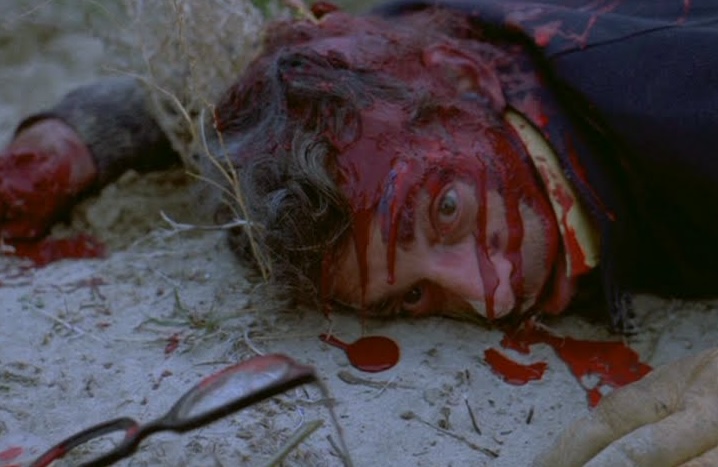
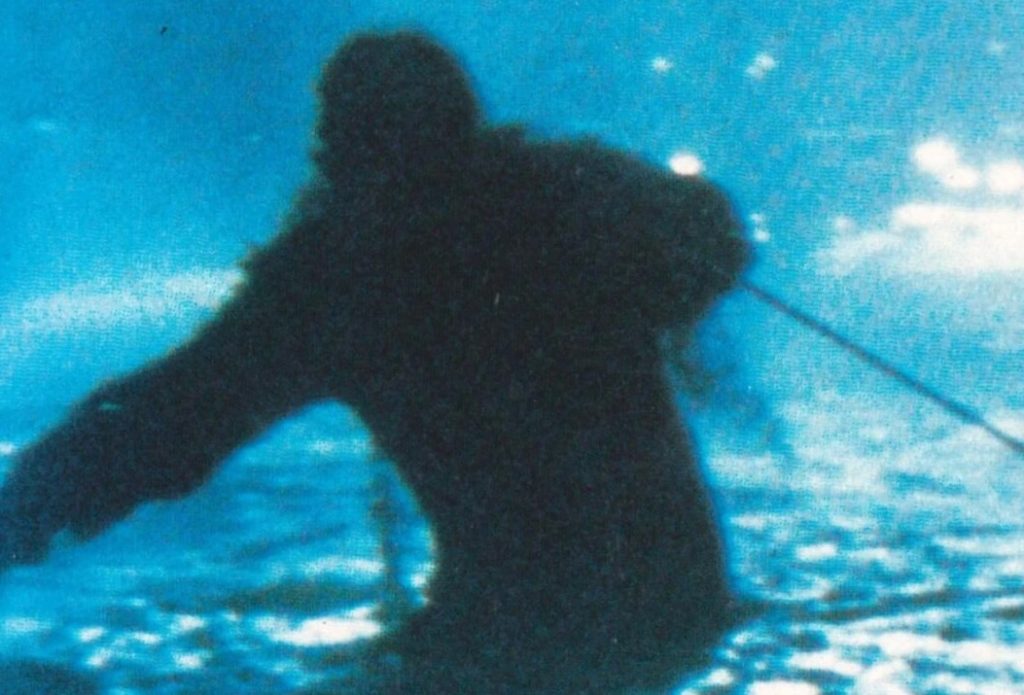
THE BARN OF THE NAKED DEAD (1973) (AKA: Terror Circus) Maniacal mama’s boy Andrew Prine, who sees himself as a sort of P.T. Barnum, kidnaps young women and keeps them chained up in his barn as part of a demented circus. Prine tortures the women (who he refers to as animals) into performing acts for his sick pleasure, which includes psychological and physical abuse—and dousing one victim in cow’s blood and setting her free while his pet mountain lion gives chase. Andrew’s mental capacity (what little is left of it) collapses and he becomes convinced one of the women is dear old Mom, who abandoned him when he was a kid. Prine’s antics are ultimately stopped after the arrival of his even crazier, mutated father, who rips Prine to pieces before running off into the sunset. A sleazy and depressing film that’s not the overzealous splatter movie its title suggests. C
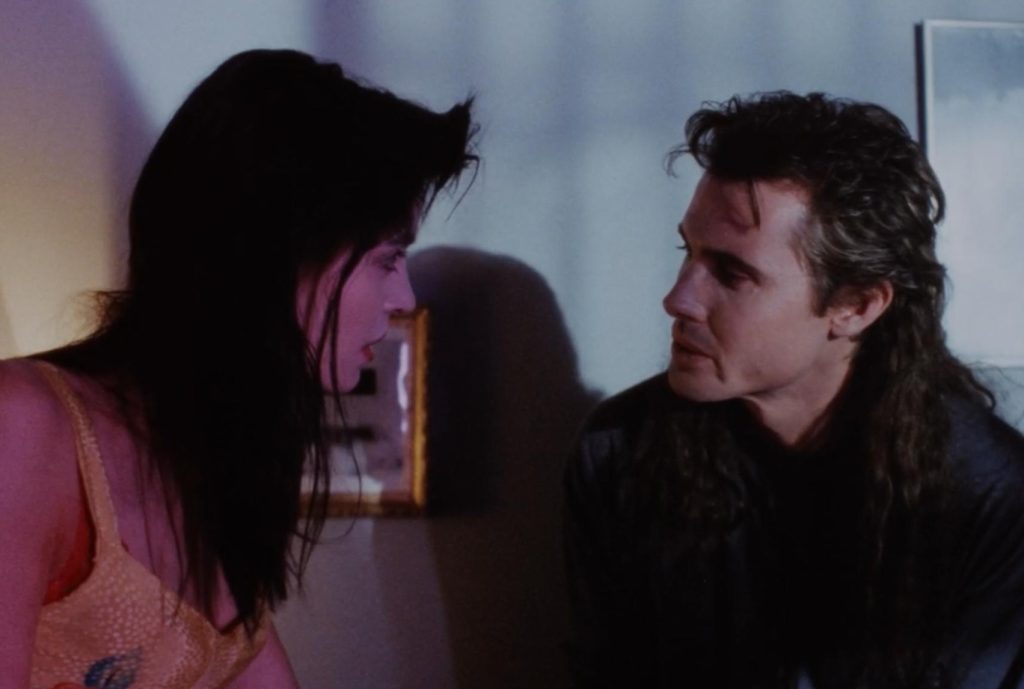
DANCE OF THE DAMNED (1989) A lonely vampire (Cyril O’Reilly) sporting a Billy Ray Cyrus mullet and looking for a mate finds a potential candidate in suicidal stripper Starr Andreeff. O’Reilly takes her back to his windowless Art Deco home, where he tries to seduces her into a world of eternal darkness before she pumps a round of bullets into his chest. Even after the bullets bounce off him and he flashes his fangs, Andreeff asks, “What are you?” O’Reilly is clearly not after her mind. The vampire exploits Andreeff’s estranged relationship with her son in order to lure her into his arms, but the experience only makes her want to live. After an all-night on-and-off brawl, O’Reilly’s human sensitivities emerge and he sacrifices himself in sunlight in a ridiculous ending that gives new meaning to anticlimactic. There’s less skin and violence than you’d expect from a production that looks like it was made for the Skinemax generation. Instead, writer/director Katt Shea (Poison Ivy) focuses on the characters, who are portrayed surprisingly well by good actors. With a little more polishing Dance of the Damned could have been a decent film. Unfortunately, it comes off more as second-rate Anne Rice. C
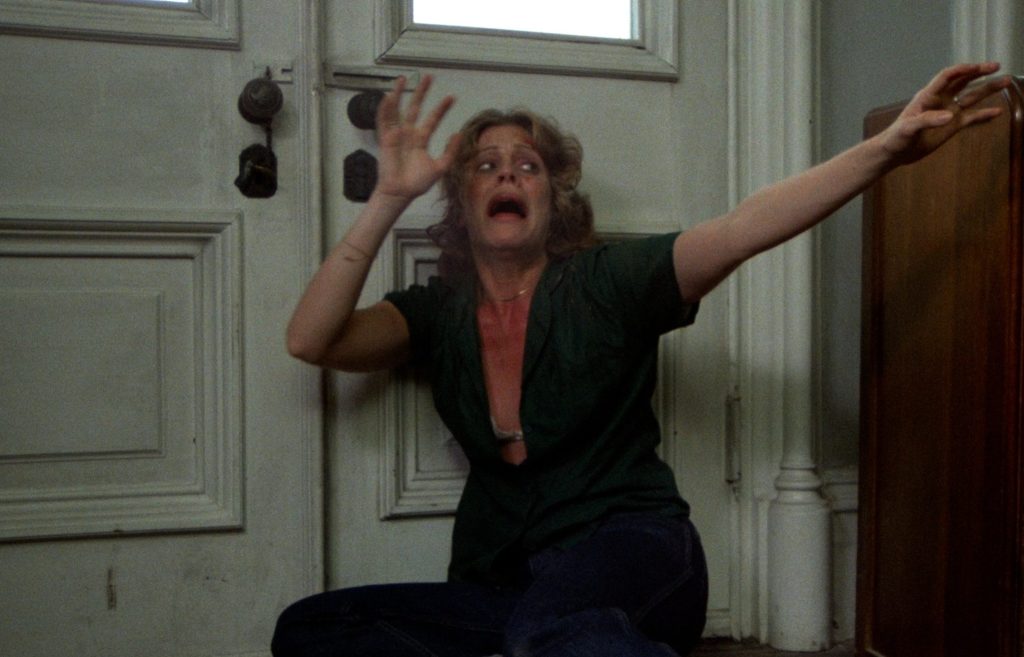
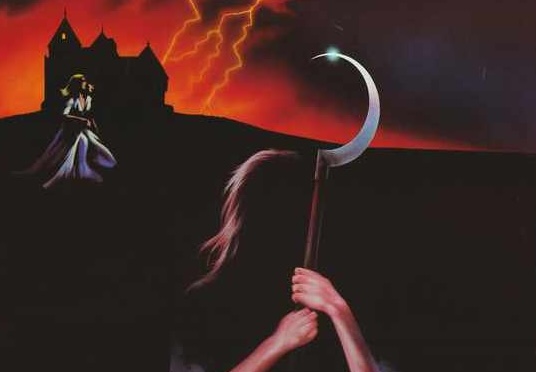
THE NESTING (1981) Nervous big city writer Robin Groves moves into a remote country home hoping it will cure her agoraphobia, unaware the place is infested with the angry spirits of its former occupants. Groves is inexplicably drawn to the Victorian building through a series of unexplained visions until the old “I’ve been here before” motif comes into play. Bumps in the night and visitations from ghosts send Groves to the brink of insanity—and viewers to the realization that the makers of this clinker have seen The Shining one too many times. The screenplay tries for more of a psychological edge, but its failure is in its lack of sympathetic characters worth caring about—like the film itself, Groves is often cold and alienating. There is a brooding atmosphere and a couple of lively murders (the scythe-to-the-face is a highlight), but the sluggish pacing makes the 104-minute running time seem like two hours. C
Legend of Boggy Creek and Sequels

The Legend of Boggy Creek 1972, US, 87m. Director: Charles B. Pierce.

Return to Boggy Creek 1977, US, 84m. Director: Tom Moore.

Boggy Creek II: And the Legend Continues – 1983, US, 92m. Director: Charles B. Pierce.

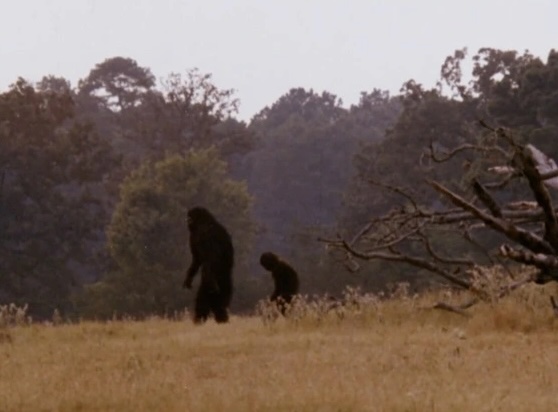
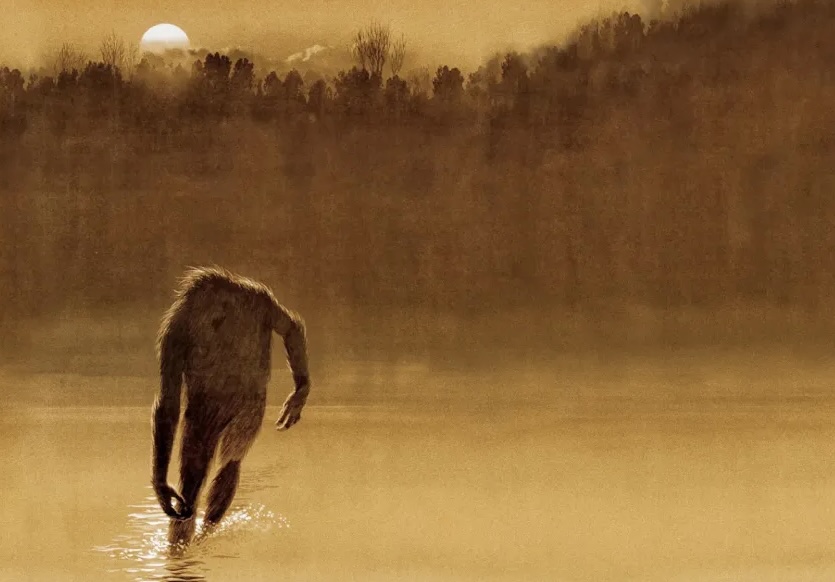
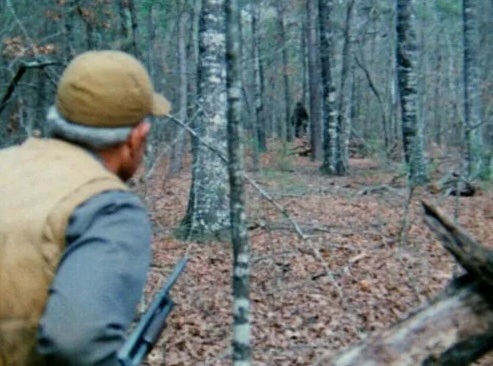
THE LEGEND OF BOGGY CREEK (1972) Independent filmmaker Charles B. Pierce single-handedly created a cottage industry with this mockumentary about a Bigfoot-like creature that stalks the surrounding swamps of a small Arkansas town. The film’s gimmick is its documentary-style presentation, featuring interviews with fishermen, hunters, and other citizens who claim to have encountered the “Fouke Monster.” Many of the stories are recreated quite effectively—the film’s grainy, low-budget quality give these scenes an unnerving detail. Although often hokey, it’s Boggy Creek‘s sense of realism that makes the movie work, and provides an element that would ultimately be influential on the television series In Search Of… as well as the found-footage subgenre revolutionized with The Blair Witch Project. A surprise hit, this was followed by an unauthorized sequel in 1977 (Return to Boggy Creek), and a legitimate one directed by Pierce in 1983, apply titled Boggy Creek II. Ironically, neither subsequent film was made in documentary fashion. B

RETURN TO BOGGY CREEK (1977) Soggy, family-friendly sequel to Charles B. Pierce’s creepy Legend of Boggy Creek (1972) about the adventures of a Sasquatch monster haunting a fishing community. In the Pierce film, the aggressive creature is referred to as the Fouke Monster because of its close proximity to Fouke, Arkansas. In Return to Boggy Creek the creature is called “Big Bay-Ty” and is more of a misunderstood gentle giant that goes out of its way to rescue a trio of kids caught in a storm while on a wilderness excursion. Competently acted—Dawn Wells of Gilligan’s Island and Dana Plato of Diff’rent Strokes play mother and daughter—but about as exciting as watching paint dry. Years later, Pierce himself would make his own sequel with Boggy Creek II: And the Legend Continues, which completely (and wisely) ignores this movie. D+

BOGGY CREEK II: AND THE LEGEND CONTINUES (1983) An anthropology professor and three students investigate claims of the Boggy Creek monster in this direct sequel to the 1972 cult favorite The Legend of Boggy Creek. The sequel ignores the documentary-style presentation of the earlier film but offers flashback sequences of creature attacks narrated by the professor (director Charles B. Pierce), none of which contain the atmospheric effectiveness of Legend of Boggy Creek—there are so many close-ups of the monster that it’s obvious it’s an actor in a mask. The scenes with the monster have an undeniably cheesy charm, but whenever the beast isn’t on screen the movie plods. And 92 minutes is a lot of Boggy time to fill. Better than Return to Boggy Creek, but not by much. C

The Blind Dead 🧟‍♂️

Tombs of the Blind Dead – 1972, Spain, 85m/100m (uncut). Director: Amando de Ossorio

The Return of the Evil Dead – 1973, Spain, 90m. Director: Amando de Ossorio

The Ghost Galleon – 1974, Spain, 87m. Director: Amando de Ossorio

Night of the Seagulls – 1975, Spain, 89m. Director: Amando de Ossorio

TOMBS OF THE BLIND DEAD (1972) Satanic knights from the Dark Ages rise from their dusty graves to feast on the blood of scantily clad women and ride on horseback in slow motion. The knights awaken without the use of sight (their eyes were devoured by crows pre-burial), but despite being nothing more than walking skeletons in robes, they can sense their prey through sound. A backpacker makes camp near the knight’s gravesite and is descended upon by the zombified pack in a suspenseful sequence. The screenplay is smart enough to understand the living characters are not nearly as interesting as the dead ones, and quickly revives recent victims of the blind dead as bloodthirsty ghouls. The film offers exposition of the knight’s historical dealings in witchcraft and human sacrifices in the form of a decrepit librarian whose scumbag son (José Thelman) is given some much deserved, limb-tearing justice by the zombies after he rapes a lesbian. In the annals of zombiedom, Tombs of the Blind Dead won’t be remembered as much of its Night of the Living Dead counterparts, but as an atmospheric chiller it comes recommended. B (Currently available on Plex, Shudder, AMC+, and YouTube.)

RETURN OF THE EVIL DEAD (1973) Despite its generic title, this is actually the second in the Blind Dead series from Spain, which began a year earlier with Tombs of the Blind Dead by introducing the dreaded Knights Templar—fifth century Satan-worshippers who rise from their graves to drink the blood of those who disturb their slumber. In this instance, it’s the quincentenary of the Knights’ massacre at the hands of villagers—villagers who burnt the Templars at the stake after gouging their eyes out with red hot pokers. The gimmick of these films—the zombies must find their prey through sound—is meant to provide a certain amount of suspense, but it’s difficult to get excited over one-dimensional characters who spend the majority of the movie screaming, moaning, and making as much noise as possible in order for the Knights to find them. That said, there’s an undeniable creepiness to the zombies, and the plot this time around seems to have been inspired even more by Night of the Living Dead than its predecessor. So, if you enjoyed the first movie, you’ll most likely enjoy this one. B(Currently not streaming.)

THE GHOST GALLEON (1974) (AKA: Horror of the Zombies) Brainless bikini models and their male cohorts learn the seaweed-strewn decks of a decaying Spanish galleon is the wrong place for a publicity stunt when zombies crawl out of the woodwork. It might sound like yet another European venture into George Romero territory, but Ghost Galleon is the continuing saga of the “blind dead”—witchcraft-practicing medieval knights who were persecuted and killed in the fifth century. As previously seen in Tombs of the Blind Dead (1972) and Return of the Evil Dead (1973), the knights keep coming back as bloodthirsty zombies to lay waste to nearby villages, and to ride horseback in slow motion. There are no horses in this entry, but the ship gives the movie a much needed change of pace and helps the paper thin plot by offering heavy atmosphere and some actual chills. The galleon is basically a replacement for the “old dark house,” but the sets are impressive, given the obviously low budget. The knights themselves are sinister and unique enough to separate them from the pack of walking stiffs that flooded theaters throughout the seventies. The gore isn’t as high this time around, but the decapitation of one of the most annoying characters in the movie is definitely a highlight. B(Currently streaming on Freevee.)

THE NIGHT OF THE SEAGULLS (1975) Those pesky Knights Templar are back in this final installment in the Blind Dead series. A doctor (Victor Petit) and his wife (Maria Kosti) move to a remote fishing village to take over the practice of a retiring physician, unaware the place is the stalking grounds of the zombified Templars, who ascend from their graves at night. To keep the Knights under control, the local hags make nightly sacrifices in the form of their younger offspring. The village idiot tries to warn the newcomers of danger but is tossed off a cliff by the superstitious townsfolk. Petit’s pretty housemaid offers herself as the next sacrifice in order to keep peace with the zombies, which is cut short when Petit gets the urge to become a hero and rescues the damsel, severing the human/zombie trust. An elaborate flashback to the Templar’s human days—which includes the cutting out of woman’s heart at the altar of a demonic statue—begins the film with a terrific Hammeresque vibe. Unfortunately, an overall lack of suspense and a climax that repeats the ending of Return of the Evil Dead makes Night of the Seagulls the weakest in the series. But if you just gotta know how it ends for our desiccated friends, you could do a lot worse than this fittingly elegant finale. C+ (Currently streaming on ShoutTV.)

Dead-End Drive-In, Fright, The Kiss, Trog

Dead-End Drive-In – 1986, Australia, 92m. Director: Brian Trenchard-Smith.

Fright – 1971, UK, 86m. Director: Peter Collinson.

The Kiss – 1988, Canada, 101m. Director: Pen Densham.

Trog – 1970, UK, 93m. Director: Freddie Francis.

DEAD-END DRIVE-IN (1986) Worldwide economic collapse and man-made chemical disasters have turned civilization into one big car crash derby. The rise in crime and teenage delinquency in an Australian town has led to the creation of secret detention centers for youthful criminals and the unemployed. Unfortunately, dimwitted Jimmy (Ned Manning) and his girlfriend, Carmen (Natalie McCurry), find themselves trapped in a center after being lured into one that’s disguised as a drive-in showing Turkey Shoot (1982). Jimmy plots to escape the electrified walls and return to some semblance of freedom while Carmen acclimates to the place’s shanty town/punk lifestyle and turns into even more of a dolt—and a racist to boot. Dead-End Drive-In has the look of a flashy music video, complete with spiked hair, dog collars, and revved up car chases. But just like a music video the film is empty and utterly forgettable the minute it’s over. Obtuse characters and a lack of any genuine excitement result in a callous Mad Max rip-off aimed at the under 18 market with nothing to offer other than its unique drive-in setting. D+ (Currently streaming on Hoopla.)

FRIGHT (1971) A college student (Susan George) is tormented by an escaped madman while babysitting at a remote house. A precursor to films like When a Stranger Calls, Halloween, and many other babysitters-in-terror titles, this British production doesn’t have any true surprises for the sophisticated viewer—it’s extremely tame by today’s standards—but it’s well-acted and manages to raise a few goosebumps during its first act. Unfortunately, the third act’s hostage standoff scenario kills any momentum the film built and sinks the premise into the doldrums of yet another police procedural. George makes a likable protagonist but it’s Honor Blackman as the level-headed ex-wife of psychopath Ian Bannon who steals the show. C (Currently streaming on Tubi.)

THE KISS (1988) After her mother is killed in a spectacular car crash, young Amy (Meredith Salenger) is thrust into a new life with her estranged aunt, Felice (Joanna Pacula). Unfortunately for Amy, beautiful Felice is host to a black magic-conjured parasitic creature that transports between humans via the title affection—and anyone who gets in the way of her plot to take over the family homestead is met with disaster. Amy’s suspicions are dismissed by her horny father (Nicholas Kilbertus), who’s too busy screwing Felice to notice his daughter’s distress. Felice also has a familiar in the form of a demonic cat-like critter that puts the kibosh to many of Amy’s friends. The Kiss doesn’t offer anything new in the teenagers-in-peril arena but instead uses elements from better horror titles (namely Cat People and The Omen) to tell its story. What the movie does have are suspense, inventive Chris Walas makeup effects, and good acting, especially from Mimi Kuzyk as Amy’s nurturing neighbor. Only a ludicrous ending undermines a decent little film. B(Available on YouTube.)

TROG (1970) A team of cave explorers in the British countryside discover a living troglodyte in the form of a prehistoric man/ape creature. “Trog” kills one of the explorers and wounds another, prompting their scientist colleague, Dr. Brockton (Joan Crawford), to capture the beast and bring it back to civilization. This causes a media frenzy in the nearby town in the form of disbelieving journalists and a hot-headed, Bible-quoting big wig named Murdock (Michael Gough) whose plan to build a hotel in the area is thwarted by Trog’s presence. Trog learns to speak (briefly), play with a ball, and makes goo-goo eyes at Brockton’s granddaughter (Kim Braden). Murdock trashes Brockton’s lab and sets Trog free into the world, where the misunderstood manimal goes on a killing spree—which includes hanging a butcher on his own meathook. Campy and ridiculous, but entertaining in spite of itself. B(Currently streaming on Prime.)

Blood Legacy, A Candle for the Devil, The Cat and the Canary

Blood Legacy – 1971, US, 82m. Director: Carl Monson.

A Candle for the Devil 1973, Spain, 87m. Director: Eugenio Martin.

Cannibal Girls1973, Canada, 85m. Director: Ivan Reitman.

The Cat and the Canary1978, UK/US, 91m. Director: Radley Metzger.

BLOOD LEGACY (1971) (AKA: Legacy of Blood; Will to Die) The spoiled offspring of a dead millionaire (John Carradine) must spend a week living in the family mansion in order to collect their inheritance. The majority of the children, along with their spouses, don’t make it far before someone with a grudge starts sending them to join daddy—a severed head is found on the kitchen table the first night. In between the murders are dull scenes of sibling rivalry and banter from the ominous house servants, including a wild-eyed, self-flagellating butler named Igor (Buck Kartalian). In a completely shocking twist (cough…. choke…) the killer is unmasked as the very much alive Carradine who went cuckoo from his wife’s infidelity years ago. The only redeeming moment that viewers can take away from this morose experience is when the housekeeper, after discovering the secret, winks at the camera and mutters, “And you thought it was the butler all along!” Touché. A deservedly forgotten film, also known as Legacy of Blood—not to be confused with Andy Milligan’s Legacy of Blood from 1978, which features the exact same plot! D (Currently streaming on Tubi.)

A CANDLE FOR THE DEVIL (1973) (AKA: It Happened at Nightmare Inn; Nightmare Hotel) Two uptight Catholic sisters operating a hotel in a Spanish village discover their buxom guest sunbathing topless and, in a fit of rage, accidentally kill the woman. Believing it’s a sign from God, the eldest sister (Aurora Bautista) quickly covers up the crime by chopping up the body and incinerating the remains in their brick fire oven. In what is either a homage or rip-off of Psycho, the dead woman’s sister (Judy Geeson) arrives in town and grows suspicious of the two owners. Yet another nubile guest triggers Bautista, who sends sis (Esperanza Roy) to the knife-sharpener for another round of God’s holy work. Later, the libidinous Roy has sex with a local man, and on her walk-of-shame home bares her thighs while trudging through thorn bushes. Geeson uses a local friend to pose as her husband and the two check in to the hotel to investigate, causing a rift in the murderous sisters’ holier-than-thou bloodshed. Tasteless and exploitative, but also very enjoyable. Avoid the heavily censored version dubbed It Happened at Nightmare Inn, which eliminates most the movie’s nudity and violence. B (Currently streaming on Tubi as It Happened at Nightmare Inn.)

CANNIBAL GIRLS (1973) A couple (Eugene Levy and Andrea Martin) on a weekend drive through some Ontario backcountry stumble upon the small town of Farmhamville. At first the place seems like a quaint hamlet, prime for food and shelter, until Martin slowly realizes the town is overlorded by a demented man known as the Reverend (Ronald Ulrich) and his three equally demented female followers. Over the years, the Reverend has turned Farmhamville into a thriving meatpacking district—the secret ingredient being human beef which is served to the community in ample amounts. A salty, weird, enjoyable bit of early seventies comedy-horror from future Ghostbusters director Ivan Reitman. B(Currently streaming on Tubi.)

THE CAT AND THE CANARY (1978) In 1934, the surviving clan of the late Cyrus West gather at the deceased’s estate for the reading of his will. The cousins are the usual assortment of self-involved yuppies, all of whom could be chosen as the sole heir of the West fortune. That is until young Annabelle (Carol Lynley) is selected as the inheritor, with the caveat that Annabelle must stay the night in the West mansion with her relatives and deemed sane the next morning. To top off the night, a madman who believes he’s a cat has escaped from an asylum and is stalking the area, and may already be inside the house. Despite this being the umpteenth filming of John Willard’s play—the most famous being the 1927 silent classic of the same name—the movie feels fresh thanks to good direction by porn auteur Radley Metzger, and a first-rate cast—Bond Girl Honor Blackman is a hoot as the sly Susan Sillsby, a conniving huntress having an incestuous relationship with her cousin (Olivia Hussey). Worth checking out for Willard enthusiasts. B (Currently streaming on Tubi.)

TV Films—Crowhaven Farm, The Initiation of Sarah, The Spell 📺

Crowhaven Farm 1970, US, 73m. Director: Walter Grauman.

The Initiation of Sarah1978, US, 97m. Director: Robert Day.

The Spell1977, US, 86m. Director: Lee Philips.

The Stranger Within – 1974, US, 74m. Director: Lee Philips.

CROWHAVEN FARM (1970) A piece of dried up farmland is bequeathed to a city slicker who’s subsequently immolated in a car crash. The place is then handed down to next of kin Hope Lange who, once moved into the isolated house with her husband (Paul Burke), becomes psychically linked to its grim past of witchcraft and Devil worship. Desperate to have a child, Lang and Burke adopt an ominous little girl (Cindy Eilbacher) who salaciously crawls into bed with daddy Burke when Lang is out of town. Turns out Eilbacher and the rest of town are the reincarnation of 17th century devil-worshippers and want Lang’s soul as payment for her ancestor’s sins. A silly but very accessible television movie taken from the Rosemary’s Baby page of supernatural Satanic horror. B(Currently not streaming.)

THE INITIATION OF SARAH (1978) College life is difficult for Sarah (Kay Lenz), an insecure freshman whose bubbly, buxom stepsister, Patty (Morgan Brittany), doesn’t have problems fitting into campus life. In order to offset the societal hierarchy, beautiful Patty is accepted into prestigious Alpha Nu Sigma, while dowdy Sarah moves into the detested Phi Epsilon Delta. Sarah slowly immerses into her new life while honing her telekinetic powers. Much like Carrie White from the Stephen King story, Sarah unconsciously—and sometimes consciously—uses her powers against her oppressors, including bigwig sorority bitch Morgan Fairchild. Those expecting a violent FX-filled showdown in the vein of Carrie‘s prom night climax might be disappointed in the movie’s subtler approach, although there is a fiery ending involving a sacrificial altar. The Initiation of Sarah‘s made-for-television aspects stop the story from becoming too exploitative, and relies on good acting and a suspenseful last third to pull the viewer in, which the film does quite well. B (Currently not streaming.)

THE SPELL (1977) Burdened with school bullies and a doltish family, Rita (Susan Myers) is an overweight fifteen-year-old at her wits end. Desperate for a resolution to her torment, Rita breaks open her psychic mind powers and begins serving the much needed justice only black magic can conjure. The first to feel Rita’s wrath is her asshole father (James Olson), who’s almost mowed down by a speeding car. A friend of the family spontaneously overheats like a hard-boiled egg and dies. Rita’s younger sister (Helen Hunt) almost drowns during a swim meet. Mom Lee Grant seeks help from a parapsychologist and tries to put a stop to Rita’s spell work, but by that point the viewer is more likely to give Rita a blue ribbon for the disposing of such despicable characters. Unlike Carrie, which this movie is ripping off, The Spell isn’t told through the viewpoint of Rita but of her mother, thereby eliminating a lot of the impact of Rita’s revenge tactics. Would Carrie White’s blood-soaked finale be as satisfying if the entire film was seen through her mother’s eyes? C (Currently streaming on Prime.)

THE STRANGER WITHIN (1974) In this Richard Matheson-scripted telefilm, which borrows elements from Rosemary’s Baby, The Exorcist, and Chariots of the Gods, carefree housewife Ann (Barbara Eden) becomes unexpectedly pregnant—a troubling revelation considering her husband, David (George Grizzard), had a vasectomy years earlier. Because he’s a man of his era, David accuses Ann of infidelity. Her sunny disposition changes, as she develops a ravenous appetite for salty foods, and a sudden interest in chemistry. It doesn’t come to the surprise of anybody (audience included) to learn Ann’s baby is not of this world and is actually an alien intelligence, cast out by its society to find a home inside Ann’s womb. Eden is good but doesn’t have much material to work with. Matheson’s screenplay is too silly to be taken seriously, leaving one to wonder if this would have worked better as an episode of I Dream of Jeannie. C (Currently not streaming.)

976-EVIL, Neon Maniacs, Rabid

976-EVIL – 1988, US, 92m. Director: Robert Englund.

Neon Maniacs – 1986, US, 90m. Director: Joseph Mangine.

Rabid – 1977, Canada, 91m. Director: David Cronenberg.

The Supernaturals – 1986, US, 90m. Director: Armand Mastroianni.

976-EVIL (1988) Robert (Freddy Krueger) Englund made his directorial debut with this visually arresting but generic film about Satanic possession in the 20th century world of 1-900 phone lines. Patrick O’Bryan is a gambling-addicted high schooler who lives with his nerdy cousin (Stephen Geoffreys) and overbearing religious fanatic aunt (Sandy Dennis). O’Bryan ultimately stumbles upon a “horrorscope” hotline that promises to fulfill his every desire—but at a price. He dials in and immediately begins winning big at the poker table, while Geoffreys does a little phoning himself and scores with the local babe. Geoffrey’s lucky streak runs out and he’s beaten up by a gang of badly dressed punks, which triggers him into redialing the direct line to Satan and becoming the embodiment of pure evil. There’s an interesting idea in here, but unfortunately it gets lost in sea of monotonous characters and a half-baked plot that disintegrates into a rip-off of the more entertaining Evilspeak (1981). Englund’s direction is assured but empty, while Geoffreys—so colorful as “Evil” Ed in Fright Night—is wasted in an underwritten role. The movie’s imagination flourishes in the last twenty minutes, offering an appropriately fiery climax, and securing 976-EVIL II‘s production a few years later. C+ (Currently streaming on Tubi.)

NEON MANIACS (1986) The oldest looking teens this side of 90210 are stalked and slaughtered by a gang of mutated killers in Golden Gate Park. The sole survivor (Leilani Sarelle) informs the police but, naturally, they don’t believe her. Sarelle’s monster-loving classmate (Donna Locke) investigates and finds out the Maniacs have a lair under the Golden Gate Bridge; a strange hideaway considering water is the only source of destroying the mutants—a splash turns one of the madmen into a puddle of blood and slime. But common sense is not something the Neon Maniacs script is rife with, and frankly, neither is character development, story structure, or much of anything in the vein of good filmmaking. The plot is littered with unbelievable coincidences, and nobody but our main protagonists seems to notice these towering monsters, despite the fact our heroes live in San Francisco. What Neon Maniacs does offer is impressive makeup FX by Allan A. Apone and Douglas J. White. It’s just a shame they aren’t featured in a better movie. C (Currently streaming on Tubi.)

RABID (1977) An experimental skin graft turns a young woman (Marilyn Chambers) into some sort of vampiric predator. The twist is that she sucks the blood of her victims from a parasitic stinger that emerges from her armpit. Instead of killing her subjects, her bite (or sting) turns them into pale-faced ghouls with an appetite for human flesh. An interesting mix of elements taken from Night of the Living Dead and a typical vampire film, Rabid plays with the same theme of David Cronenberg’s previous horror feature, Shivers, in which seemingly normal-minded people are turned into ravenous monsters. And just as with Shivers, sexuality is an obvious subtext for the spreading of the virus—Chambers’s stinger protrudes from an orifice-like hole and penetrates her (mostly) male casualties. Chambers is quite good, and the plague/contamination subplot is eerily effective, and reminiscent of recent history. Interestingly enough, an attack sequence taking place inside a mall predates Romero’s Dawn of the Dead by a year. B (Currently streaming on Prime.)

THE SUPERNATURALS (1986) Army personnel on a training exercise in some Virginia woods interrupt the slumber of murdered Confederate soldiers that come back from the dead for revenge. A soldier discovers a hidden underground bunker with the rotting remains of its former Rebel inhabitants. The wife of one of the murdered Rebs returns as a ghost to warn the characters of impending doom, but fails miserably when the army brats start getting picked off by the zombified cavalry. The film plods as slowly as its musty antagonists—nothing much exciting happens within the first forty minutes. Even after the zombies start walking and—gasp!—using artillery against the modern-day soldiers, the movie fails to muster any suspense. The breathing characters are a forgettable mix of macho military caricatures that you feel nothing for when they meet their maker. The Supernaturals is such a lousy production it’s rather difficult to believe Nichelle Nichols, Maxwell Caulfield, Talia Balsam, and LeVar Burton had anything to do with it—but here they are, slumming it (especially Caulfield whose performance is so lifeless you’d think he was auditioning to be one of the walking stiffs). Director Armand Mastroianni made the much better and atmospheric He Knows You’re Alone (1980). D (Currently available on YouTube.)